
Collection Stories
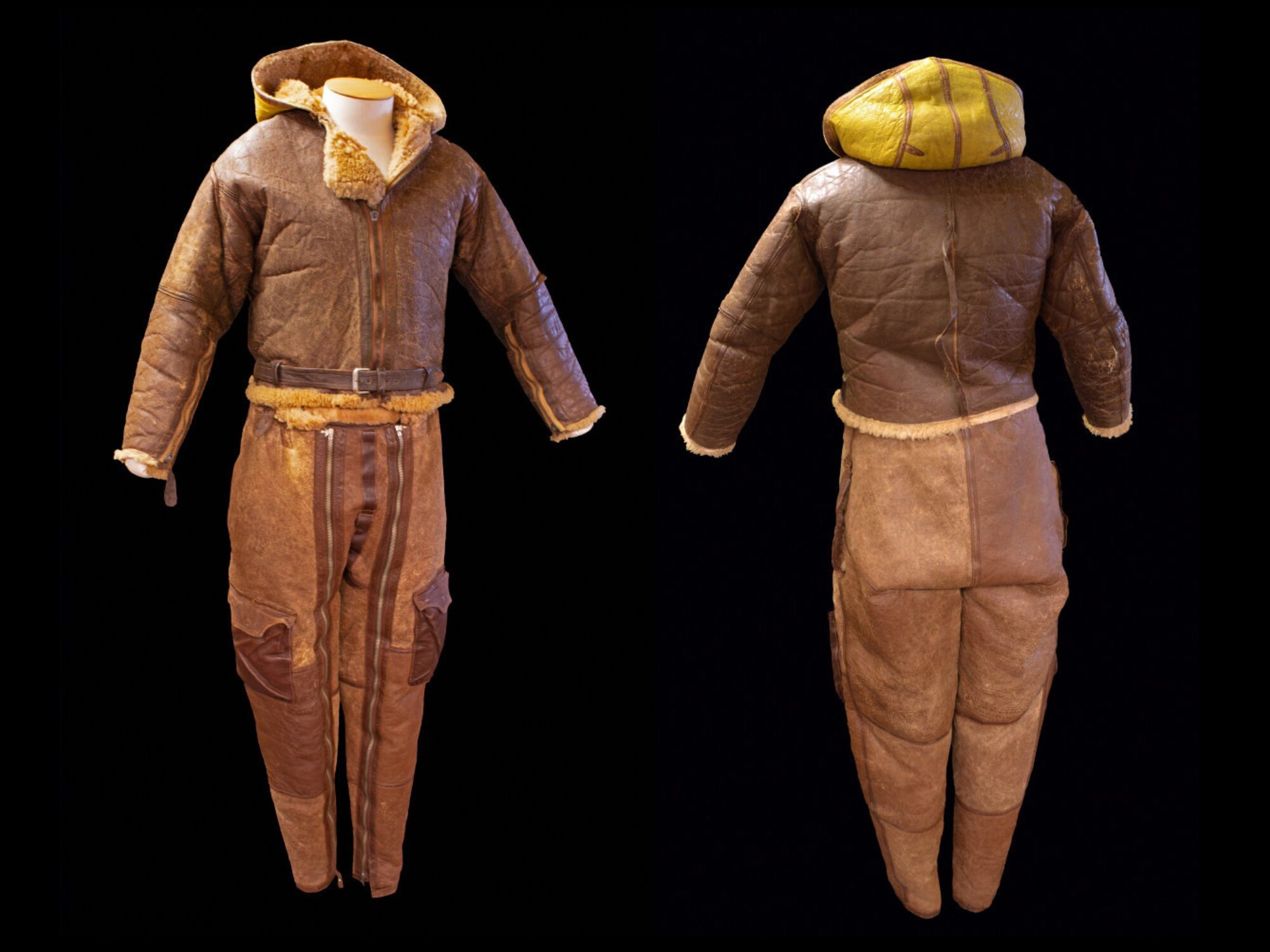
Hollywood stuntman and parachute pioneer, Leslie Irvin designed this sheepskin flying jacket and trousers, dubbed the ‘Irvin Suit’, which became Royal Air Force issue in 1938.
Sub-zero temperatures at high altitude were common for pilots and the thick fleece lining and durable hide provided vital insulation, while the full-length zip on the trousers, lower sleeves and jacket centre front ensured easy removal in an emergency.
The trousers which feature integral elastic braces and side slits for accessing clothing underneath, belonged to Whanganui Flight Lieutenant Garry Craig (1913-1993). Craig was an air gunner during WWII with the Coastal Command, patrolling the North Sea off England’s coast, and on one occasion, survived five days of sub-zero conditions in a life raft after his aircraft was shot down.
The jacket is believed to have been worn by a pilot who crash landed near Brunswick, rural Whanganui and gifted to Mrs Harrison, who later gave it to the donor in the 1960s. While the pilot has not yet been identified, his height and a possible name ‘HORORE’ written on the label gives clues to his identity.
These life-saving garments speak to Whanganui’s aviation history, of innovation and survival.
Flying jacket, 1939 – 1945
Designer Leslie Irvin, manufactured in the UK
Made from sheepskin, leather and metal
Donated by Ian Moore, 2008
WRM 2008.57
Flying trousers, c.1939
Designer Leslie Irvin, manufacturer Robinson & Ensum, London
Made from lambskin, leather, elastic and metal braces
Donated by Helen Craig, 2008
WRM 2008.95.1
Photographed by Kathy Greensides
View the full-length image