
Collection Stories
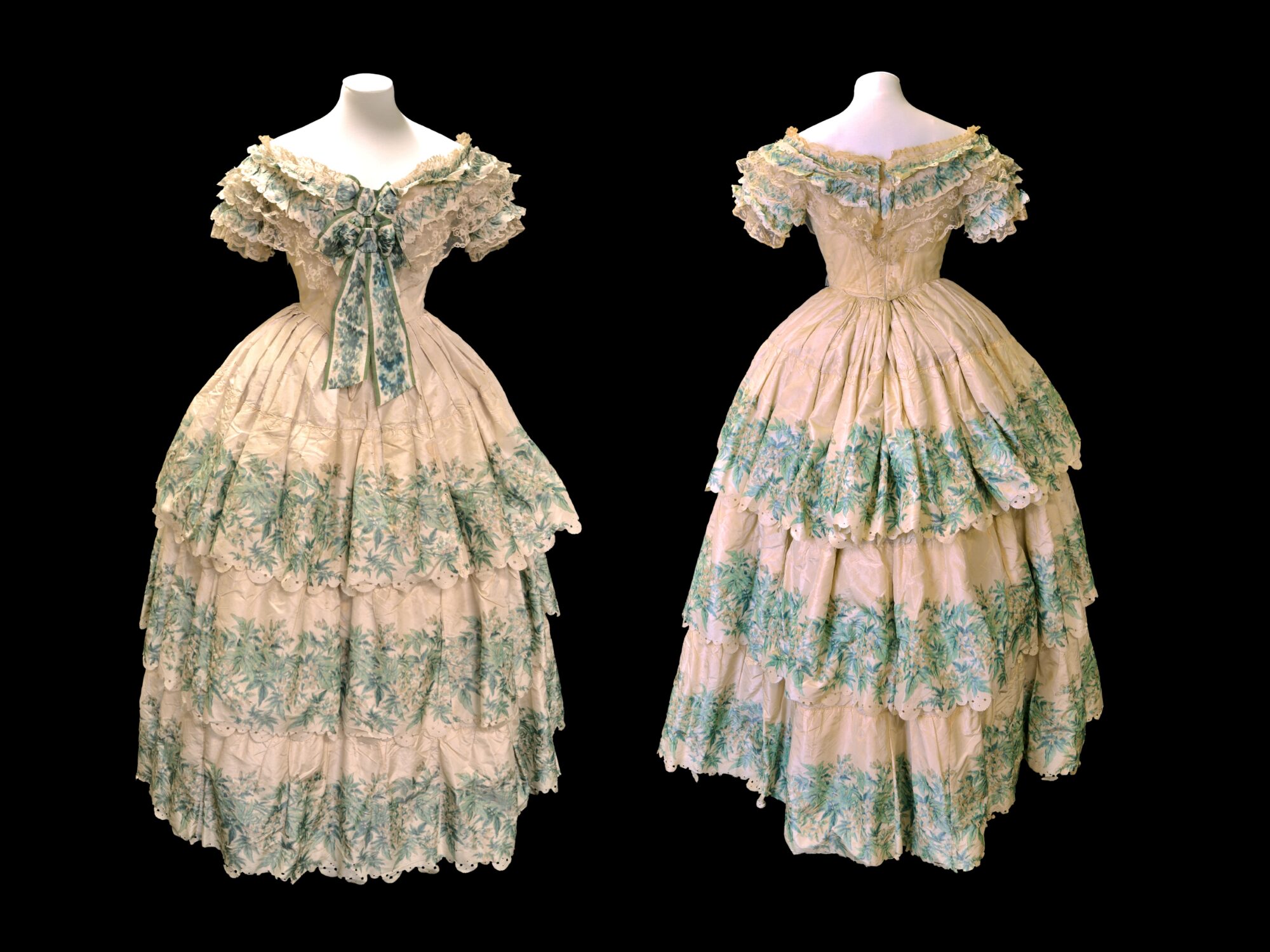
This gorgeous silk evening dress was designed to signal wealth, refinement and style.
Worn off the shoulder with a low bertha neckline, short sleeves and a sharply pointed bodice, it reflects the elegance and style of mid-nineteenth-century evening fashion. Its full skirt, cut in five panels and finished with gathered flounces, creates the fashionable bell-shaped silhouette of the 1850s.
Beneath its graceful appearance lies remarkable craftsmanship. Every seam is hand stitched using fine running stitches, neatly finished edges and hand-sewn eyelets. Lined with cotton or linen it has a rigid steel front stay and flexible baleen boning shaping the petite bodice.
The skirt’s green floral flounces are decorated using the Chiné à la branche printing technique, which produces softly blurred patterns and is inspired by the resist-dyed yarn traditions of Indian and Indonesian ikat textiles.
While visually striking, the green colour may have been created with arsenic-based pigments, widely used to create green dyes during the nineteenth century despite their toxic properties.
Donated by Molly Hutchinson, the dress is believed to have been worn by her grandmother, Ella Beatrice Lance (née Monckton, born 1876). However, its earlier style suggests it was an inherited family gown, reflecting the wealth and status of a prior generation.
Evening gown, 1850s
Designer and maker unknown
Made from silk, cotton or linen, steel and baleen
WRM 1984.33
Photographed by Kathy Greensides
View the full-length image