
Collection Stories
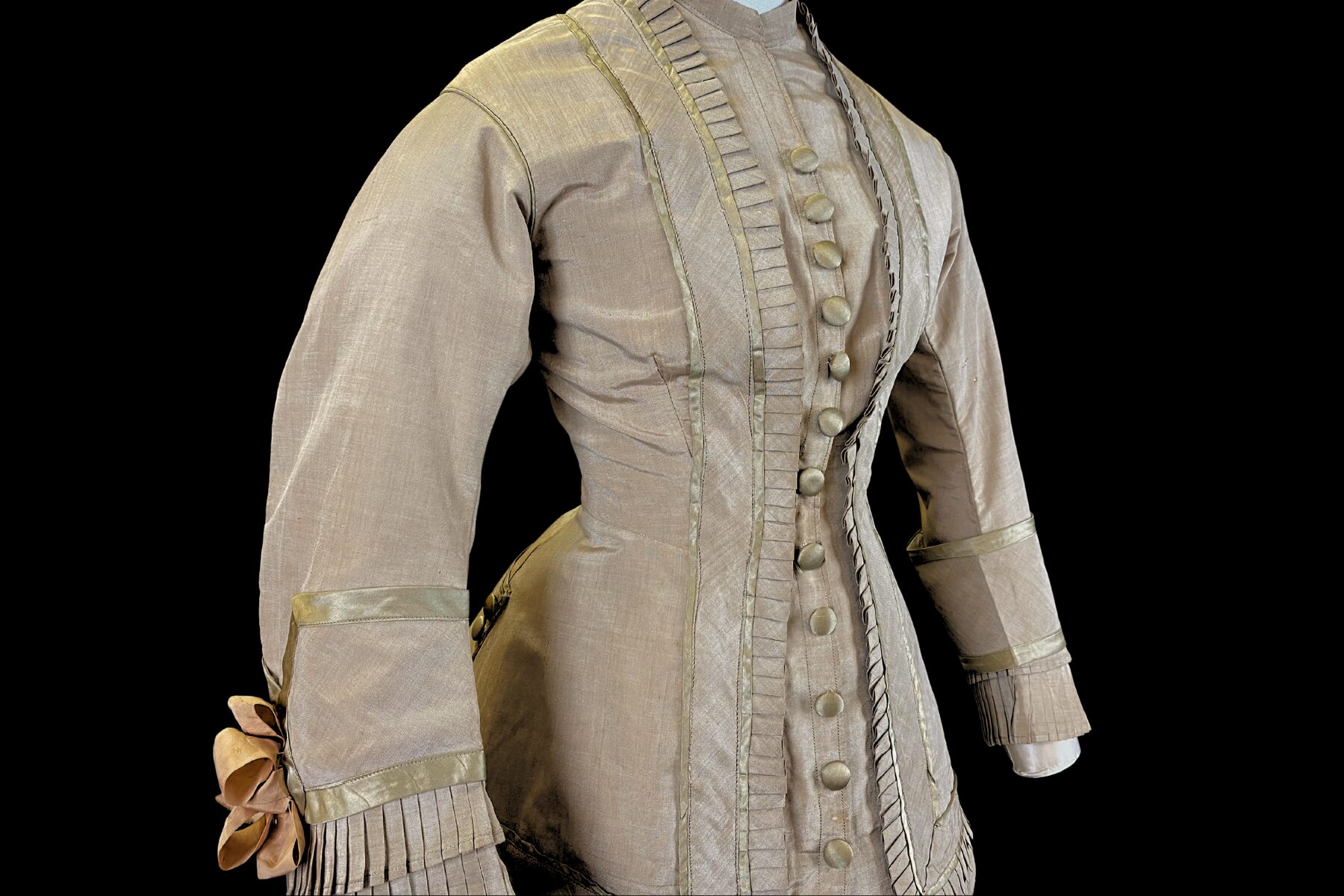
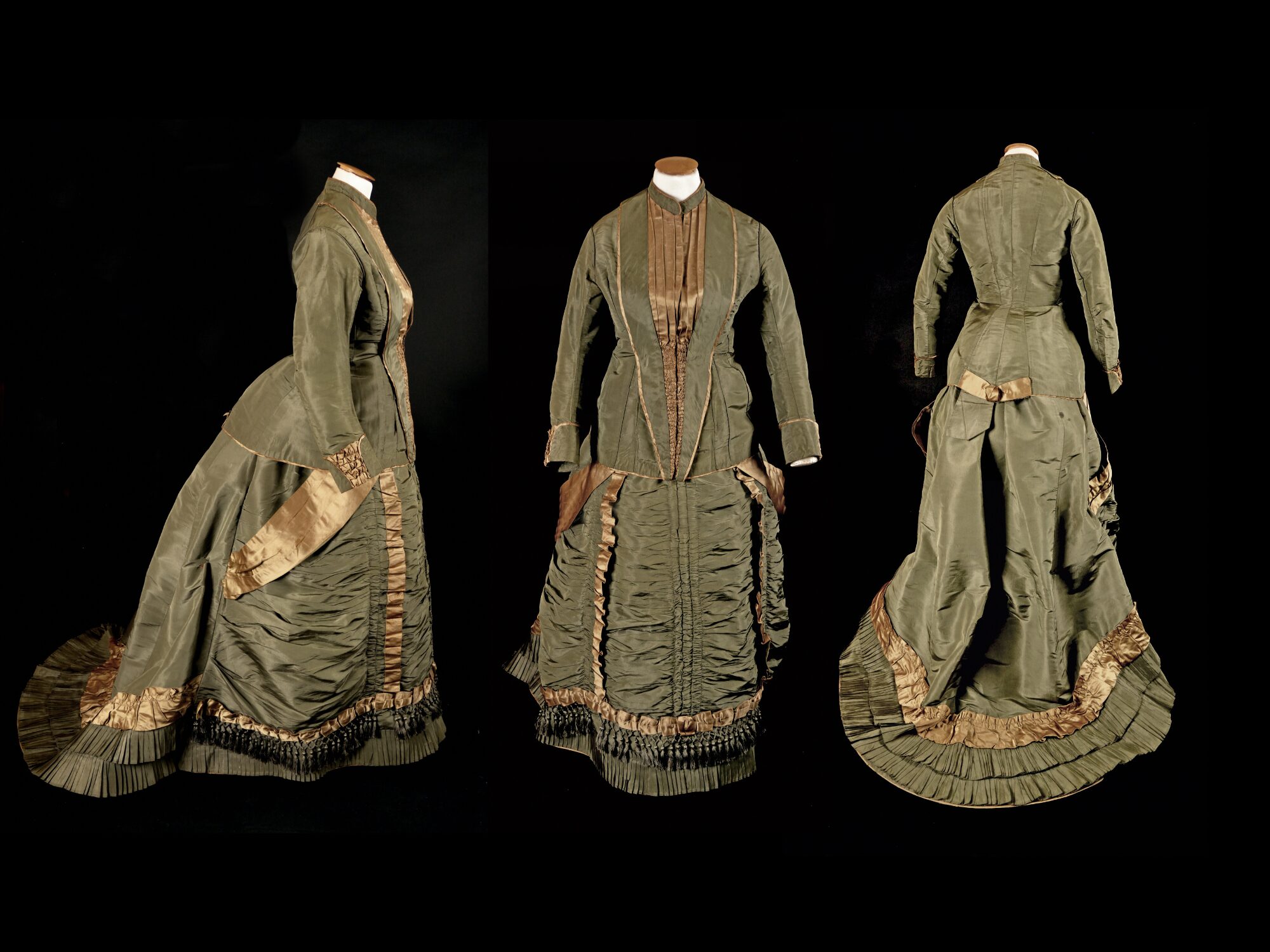
Pleats, piping, ruching, and a row of tassels decorate this fashionable ensemble from the late 1870s. The khaki green silk faille bodice is cut in the ‘Princess line’, with no waist seam, creating a long, smooth silhouette.
The skirt was worn over a “natural form” bustle, popular from 1876 to 1882. Hidden within the skirt is a clever innovation: cords threaded through rings to lift it and shape the train – patented as a “skirt elevator”.
The outfit was likely worn by nineteen-year-old Mary Muir for her marriage to Alexander Thomson in Paisley, Scotland, in June 1880. A label inside names the makers as the Misses McDougall, who lived and worked in the High Street of Paisley, then a global centre of textile production.
Soon after their wedding, Mary and Alexander emigrated to New Zealand, farming in Southland for over twenty years before moving north to Hāwera around 1902.
With fourteen children to look after, Mary Thomson may have had little opportunity to wear such a special outfit again. It is remarkably well preserved and was given to the museum in 1986 by Mary’s granddaughter, Dorothy Joyce.
Bodice and Skirt Ensemble, 1879-80
Makers: Agnes, Maggie and Mary Ann McDougall, Paisley, Scotland
Silk Faille with Sateen Trimming
Donated by Dorothy Joyce, 1986
WRM 1986.22
Photographed by Kathy Greensides
View the full-length image