

News
This October, the Museum’s Outfit of the Month fashion talk takes a darker turn, exploring two items of 1870s men’s fashion – and the toxic legacy hidden beneath the stately appearance of a Victorian top hat.
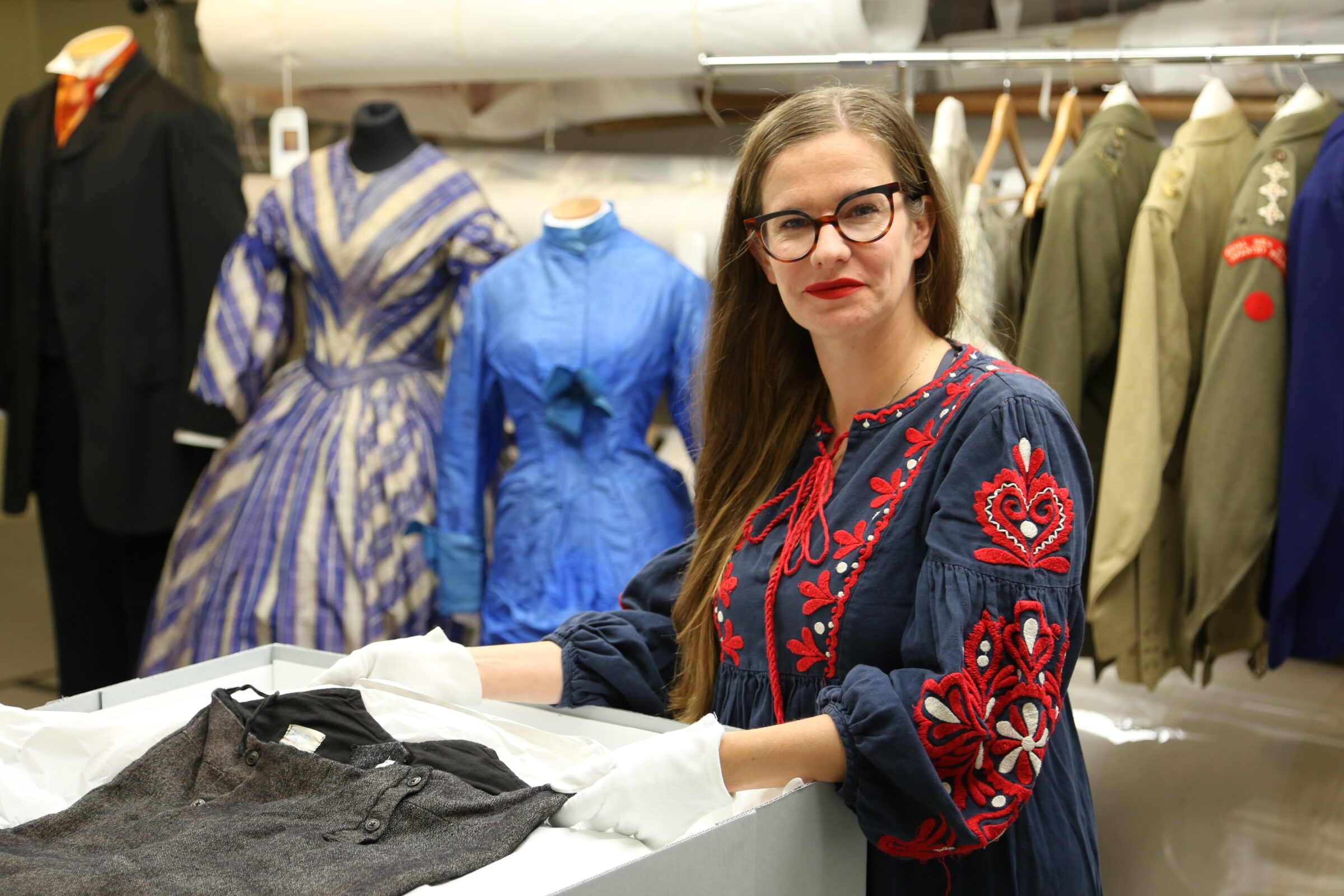
Stephanie Wood, the Museum’s Kaihāpai Taonga/Curator, Fashion and Textiles, will examine a beaver-fur top hat and a men’s black worsted wool dress suit from the Museum’s collection. With Halloween approaching, Steph will explore both the Gothic associations of Victorian fashion and the harmful effects of fur hat production in the 19th century.
The process used to cure animal pelts and turn fur into felt for hats, known as carotting, involved mercuric nitrate. Prolonged exposure to mercury vapours could cause mercury poisoning, including a condition known as erethism or ‘mad hatter disease’. Symptoms could include behavioural and mood changes, hallucinations, tremors, memory loss and seizures.
The phrase ‘mad as a hatter’ became associated with the effects of mercury exposure among hat makers and later entered popular culture through characters such as Lewis Carroll’s Mad Hatter in Alice’s Adventures in Wonderland.
“The Victorian period gave us some wonderfully dramatic fashions – tall hats, dark suits and silhouettes that could look elegant or imposing,” says Stephanie. “But beneath that stately appearance is a much darker history.”
“And then there’s the Gothic side of Victorian fashion. Add a little fog, a darkened street and a character with questionable intentions, and you have the visual language of Gothic horror. It’s fascinating to see how real fashions of the time have become so strongly connected with the villains we know from popular culture.”
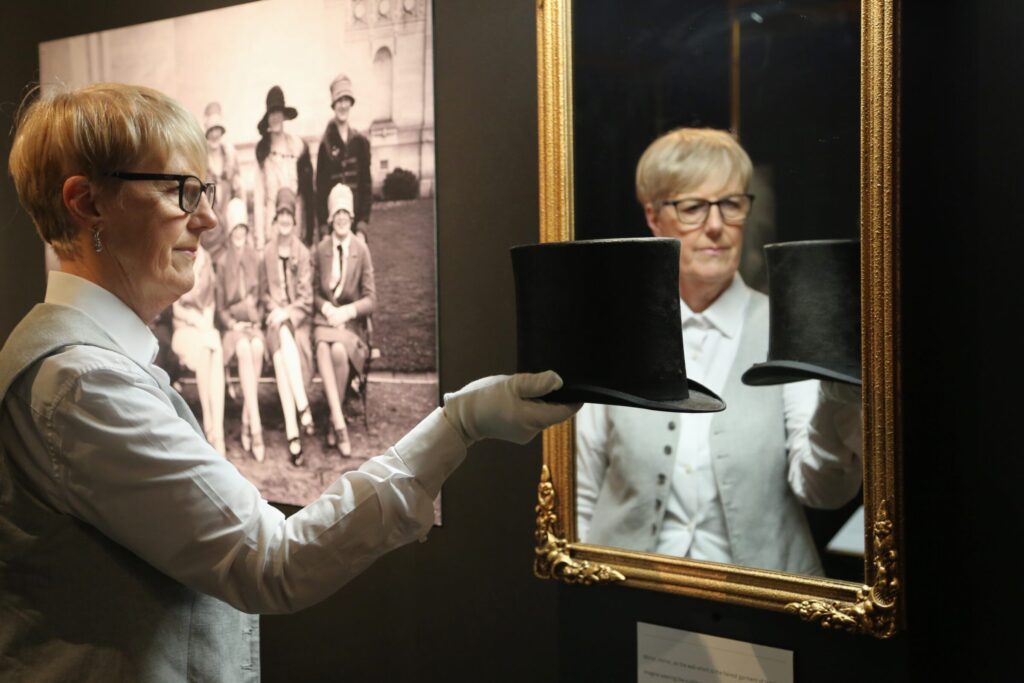
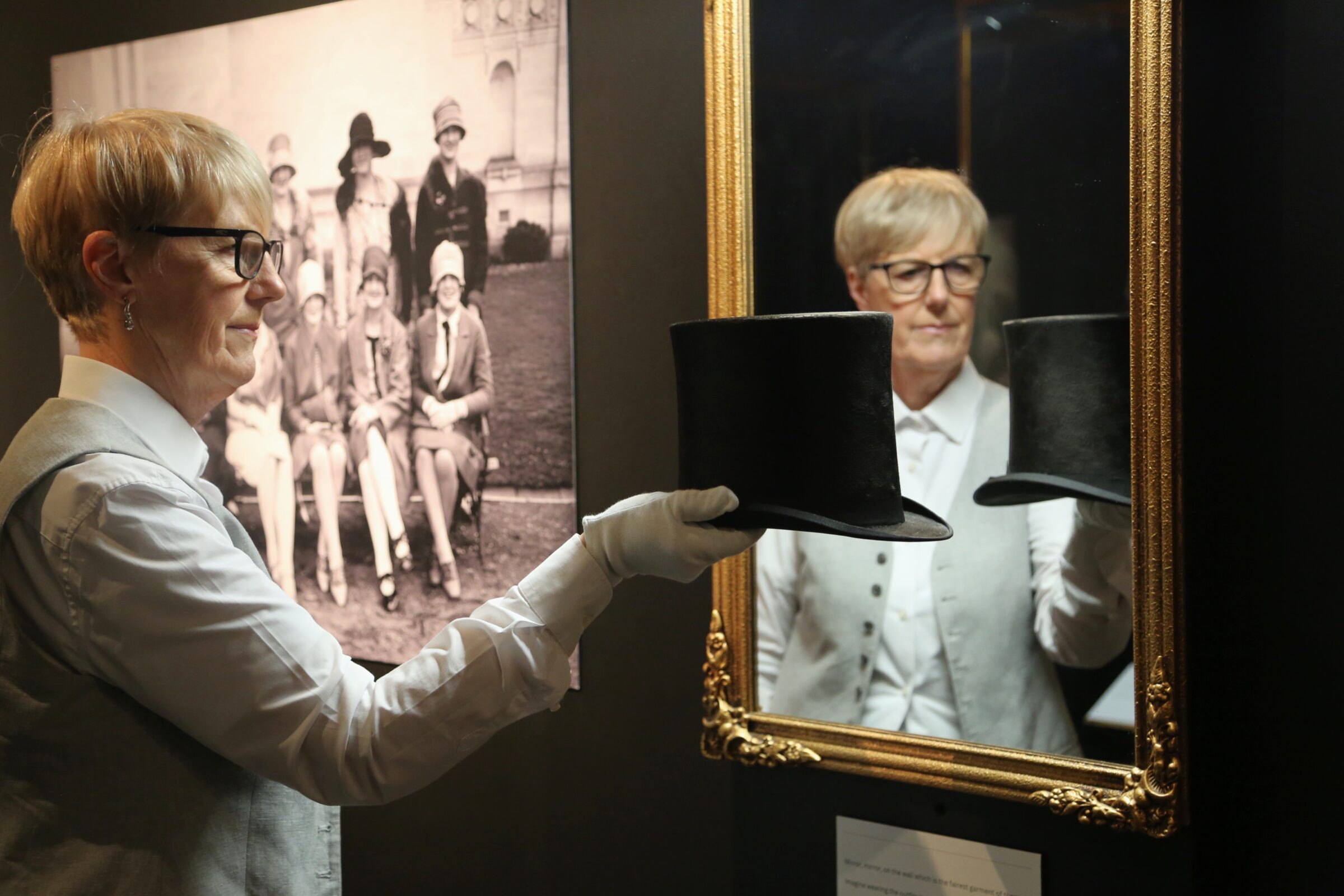
Kathy Greensides (Kaiwhakaahua me te Kaiāwhina Kohinga / Photographer & Collections Assistant) holds the beaver-fur top hat.
Photo: Karen Hughes, Te Puni Tiaki Taonga o Whanganui/Whanganui Regional Museum
The black beaver-fur top hat belonged to John Randal, who migrated from England to Whanganui in 1875. A skilled builder, Randal constructed houses, businesses and several churches in the district. It is one of 88 objects and photographs from the collection of the Randal family of ‘Titchfield’, later ‘Holly Lodge’, at Papaiti, Whanganui.
Regular followers of the Outfit of the Month series may recall the 1910s muslin dress featured in March, which also came from the Randal family collection. The collection was donated to the Museum by Annie and John Randal’s granddaughter, Mrs Evelyn Vincent (Evelyn Dorothy Randal), in 1985.
The second item to feature in the talk is a black worsted wool dress suit made by London tailor Curtis & Brooks of Fleet Street and donated by Mrs Wooten from the estate of Mrs H.B. Fitzherbert in 1979.
The Outfit of the Month talk takes place at Whanganui Regional Museum at 12.15pm on Friday 2 October. The talk is free and no booking is required. Koha (donations) to support the Museum’s ongoing heritage preservation work are always welcomed.
The top hat and dress suit will remain on display throughout October.
Read the interview and story published by Whanganui Chronicle here: Top hat with ‘sinister secret’ on display at Whanganui Regional Museum
Karen Hughes
22 September 2026
Fashion Talks
Latest News
5 October 2026
Students to put their own stamp on Whanganui’s creative landscape
22 September 2026
Top hats, tails and villains – the sinister side of Victorian style
3 September 2026
Give it a Go! Museum Celebrates Te Wiki o Te Reo Māori
6 August 2026
New Series Brings Live Music to Museum
3 August 2026